A Universe Within Oneself

Story is nothing without the people who inhabit it. The characters, if you will. Francis Bacon observed in The Advancement of Learning (1605), “The world is made for man, not man for the world.” It is the same with a story. The story does not exist outside the characters. Outside their trials, their choices, their conflicts, their ultimate success or their inevitable failure, there is an emptiness. There is no reason for trees to grow or for seasons to change. There is no impetus for a butterfly to land on a milkweed flower. In this world, if a tree falls in the forest and no one is there to hear it, it does not make a sound.
Of course, any thought of character calls to mind the protagonist. The heros and heroines who we follow from harm to safety. I love my protagonists, but I want to focus on the minor players. The ones we do not see that often and may not seem to do very much in the story. But I think they play crucial roles. Just as I say the story cannot exist outside the character, those major players cannot sally forth without the minor ones. They are not decorations; they are morally essential.
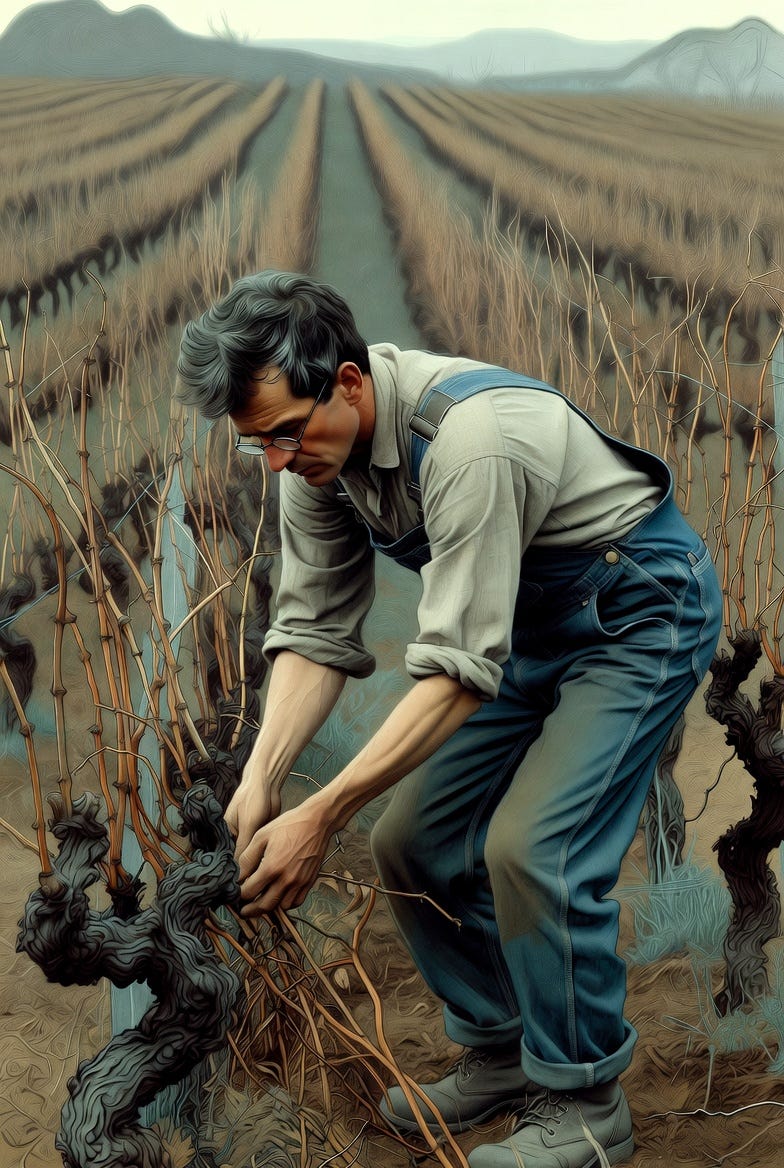
With this in mind, let me tell you about Bill Arden. He doesn’t have much to say. Bill is Hawthorne’s father in Songless. He is quiet and self-contained. He built a life, a property, raised a daughter, and learned not to look too closely. He doesn’t like what’s happening in the valley. But he doesn’t resist in any meaningful way. He leaves his wife to handle conflict. He leaves his daughter to survive it.
Bill does love his daughter and doesn’t mean to be a dangerous man. He is not malicious. He simply chooses to drift in the background instead of asserting himself. On the few occasions he does assert himself, he is easily turned back. He stays in a decaying land because he knows no other. As he tells her, “I don’t know how to live anywhere else.”
It is his passivity, however, that gives the shadows in the valley space. His daughter suffers so he can endure. Is it a bargain he knowingly makes? Or is it simply a slow progression that leads him to inhabit the shadows? As we follow him through the story, he talks less and less. For Bill, the cost of his inaction, his getting along, becomes so high that the debt can no longer be ignored. He would not make the world, so the world remade him.
For endurance masquerading as goodness corrodes love.
But he is not a villain; that would be too simple. And characters, like people, may be obvious, but they are never simple. When Hannah visits him, we see a father who loves his daughter but he cannot seem to act on that love. He is dragged into interruption for the same reasons he passively watches as she is forced into abuse and entrapment, and in this tension her changing worldview and his desire to maintain the semblance of a world he knows clash.
Where characters collide is the heart of story. In this place, we hear a tree falling in the woods. The wrestling of personality against personality. Iron not only sharpens iron, but they define each other. Characters can do more than serve as archetypes. They can allow us to explore the microcosm that is man, as Bacon inferred. Even though this father-daughter relationship appears briefly, it offers insight into a fading man and the effect it has on his daughter. Even she tries to endure, for that was the pattern he modeled for her. We learn this when we see Bill. We see what avoidance does to a child and to a valley. We can explore the entire world through the interiority of a single soul.